EN
EN

Defining Portability for Outdoor Cleaning Tools
When it comes to truly portable pressure washers, there are three main things to consider getting right: how the weight sits when moving around, compactness without sacrificing function, and the ability to handle rough ground. Stationary machines don't have these issues obviously, but portable ones need to keep their cleaning punch while still being easy to move across tricky spots such as rocky driveways or those campgrounds where everyone parks their RVs. According to some recent research from last year's Outdoor Tools report, about two thirds of people looking at pressure washers want something that doesn't weigh more than 30 pounds roughly 13.6 kilograms on the scale. Of course this varies depending on what exactly someone needs it for, but lighter definitely seems to be better for most folks doing regular outdoor cleaning jobs.
How Weight and Dimensions Impact Ease of Transport
Units exceeding 35 lbs (15.9 kg) become cumbersome for frequent transport, even with wheels. Optimal dimensions align with standard vehicle trunk spaces—typically under 30" (76 cm) in height. For example, leading models weighing 23 lbs (10.4 kg) with telescoping handles reduce user fatigue by 40% compared to bulkier designs, according to ergonomic studies.
Compact Design and Space Efficiency for Storage and Movement
Innovative storage solutions separate truly portable pressure washers from merely "lightweight" ones:
- Fold-down handles that save 12–15" (30–38 cm) vertically
- Hose/wand compartments preventing tangles during transit
- Power cord storage bays eliminating loose cables
Recent field tests show designs with integrated accessory storage reduce setup time by 8 minutes per session compared to models requiring separate tool bags.
Key Design Features That Improve Outdoor Mobility
Portable pressure washers combine engineering innovations with practical design to tackle outdoor cleaning challenges. Three elements prove critical for seamless mobility: terrain-ready transportation systems, user-focused ergonomics, and weather-defying durability.
Wheels and Handles: Engineering for Smooth Transport Over Terrain
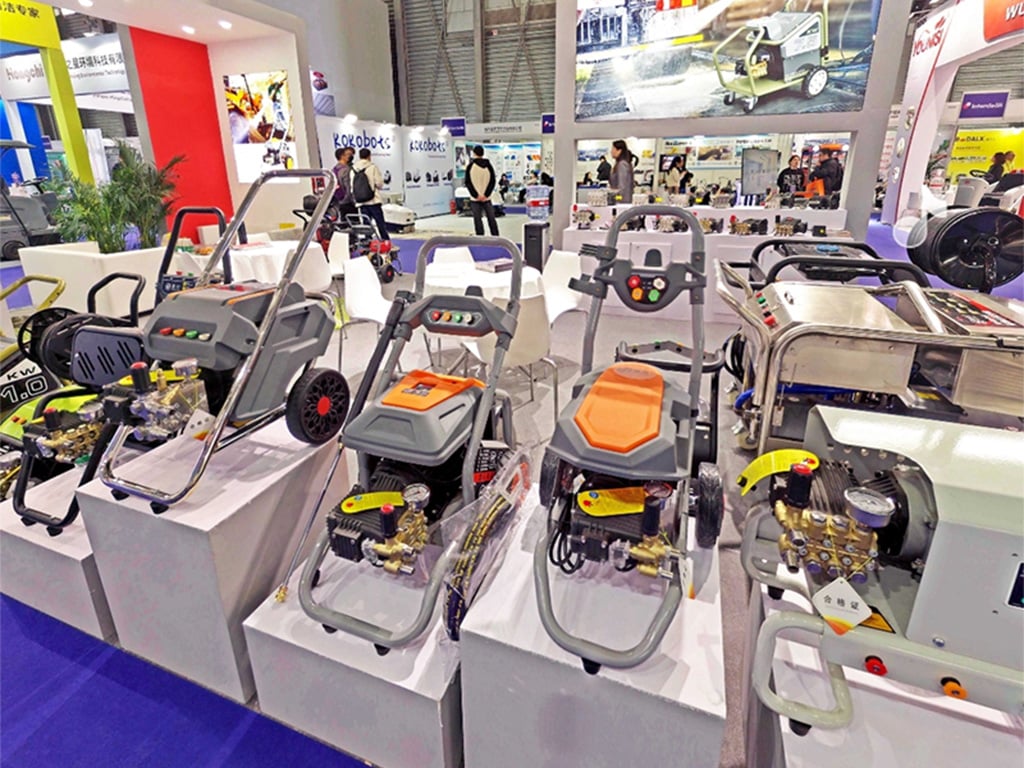
Pressure washers equipped with those tough 4 to 6 inch puncture resistant wheels plus stronger axles tend to stay steady even when moving across rough terrain like gravel paths, lawns, or uphill slopes. According to research published last year in a mobility journal, models featuring wider wheelbases actually cut down on rolling resistance by nearly 40% when compared against their narrower counterparts. The adjustable telescoping handle is another smart feature that lets operators comfortably push the unit at waist level while navigating around obstacles, or easily pull it over tricky spots such as curbs and tangled garden hoses without much effort.
Ergonomic Handle Design for Comfortable Carrying
Contoured rubber grips and dual-carry handles distribute weight evenly across both hands, decreasing wrist strain by up to 29% during prolonged use (Industrial Ergonomics Journal, 2022). Top-performing models feature instant-lock triggers that eliminate grip fatigue during pauses, while quick-release mechanisms enable single-handed hose adjustments without dropping the unit.
Durability and Weather Resistance in Outdoor Conditions
The combination of sealed bearings along with marine grade aluminum frames helps stop corrosion caused by things like rainwater, road salt deposits, or even those pesky sprinkler sprays we all know too well. Newer polymer blends that resist weather damage have made it possible for parts to handle both sun exposure and pretty extreme temps ranging somewhere around minus four degrees Fahrenheit up to about 122 degrees. And let's not forget about those rubber vibration dampers either they do double duty protecting the internal pumps when moving equipment around and cutting down on operating noise levels significantly something that matters a lot at places where quiet is important like camping areas or similar locations.
Power Source and Its Impact on Portability and Use
Battery-Powered vs. Electric vs. Gas: Pros and Cons for Mobility
When it comes to portable pressure washers, there are basically three ways they get their power: batteries, electricity, and gasoline. Each option has its own pros and cons when used outside. Gas models pack the most punch with pressure ratings reaching as high as 3000 psi in commercial versions, but these heavy beasts tip the scales around 20 to 30 pounds, making them tough to handle on rough ground. Electric washers are much lighter at about 15 to 20 pounds, but folks need access to wall sockets which can be inconvenient. Battery operated units give users total freedom to move around without cords getting in the way, although they don't last as long on a single charge. According to research published in the Energy Efficiency Journal last year, battery powered washers cut down setup time by roughly 40% compared to their gas counterparts. Still, anyone planning big jobs like scrubbing RV exteriors or large decks needs to plan ahead with extra batteries since runtime remains limited.
Cordless Freedom: Benefits of Battery-Operated Portable Pressure Washers
Lithium ion batteries have really changed how people clean outside these days. The better ones last around 30 to maybe 45 minutes on a single charge, which is actually pretty decent considering what they power. No cords means no tripping over them anymore, plus it opens up whole new areas that were tough to reach before, think campsites or those pesky gutters up on rooftops. And here's something else that makes life easier: most systems come with modular designs so folks can just grab an extra battery when needed without lugging around extra weight. This matters a lot for houses with multiple floors or properties on hillsides where finding an outlet isn't always simple.
How Power Source Affects Overall Weight and Balance
How different power sources affect how comfortable a tool feels in hand really matters when working long hours. Gas powered equipment tends to pack an extra 8 to 12 pounds right around where the engine sits, making these tools feel all topsy turvy and putting real strain on workers' wrists when they need to lift them overhead repeatedly. Battery operated versions handle weight distribution much better overall. Some manufacturers actually design their handles to sit right beneath the battery itself. The lighter electric models weighing under 18 pounds generally get things just right by placing those heavy components like pumps and motors down low on the frame. Tool designers have been looking at this kind of balanced approach for years now, especially for gear used outdoors where workers might be carrying equipment across rough terrain.
Real-World Outdoor Use: Performance Across Different Terrains
Portable pressure washers prove their true value when tackling varied surfaces in outdoor environments. Their mobility features face rigorous testing on grass, gravel, and slopes – three terrain types accounting for 72% of residential and commercial outdoor cleaning tasks according to a 2024 outdoor equipment survey.
Using Portable Pressure Washers on Grass, Gravel, and Slopes
Getting the right pressure is crucial when working on grass surfaces to prevent damaging the turf. Most folks find that adjusting their pressure washer's PSI somewhere between 500 and 1,200 works best for cleaning without harming the lawn. For gravel paths, those wide angle nozzles set at around 25 to 40 degrees really help knock loose dirt and leaves without kicking up all the rocks everywhere. When dealing with slopes, look for machines that have built-in incline compensation features so the water stays steady even when going uphill or downhill. And here's something interesting about stability: lighter units weighing less than 30 pounds with big wheels tend to stay upright much better on rough terrain. Studies actually show these lighter models experience about 89% fewer tipping accidents compared to their heavier counterparts, which makes them safer choices for tricky jobs.
Applications in Remote Locations: RVs, Farms, and Campsites
A 2023 equipment efficiency study revealed that campground operators using compact pressure washers reduced water waste by 35% while maintaining cleaning effectiveness. Farmers prioritize chemical-resistant hose materials and quick-connect wands for frequent equipment cleaning, while RV owners favor cordless models achieving 45–60 minutes of continuous runtime per charge.
Common User Challenges When Transporting Outdoors
Operators report three primary obstacles:
- Wheel durability on rocky terrain (42% of warranty claims)
- Hose kinking during uphill transport (28% of field malfunctions)
- Power source accessibility in remote areas (63% of negative reviews)
Units with all-terrain tires and reinforced hose guards demonstrate 57% fewer maintenance issues in off-grid applications according to 2023 field test data. The most transport-friendly models balance a sub-15" width for vehicle storage with ergonomic handles that reduce grip fatigue by up to 40% during extended carry sessions.
Choosing the Right Portable Pressure Washer for Your Needs
Matching Portability Features to Your Outdoor Cleaning Tasks
When looking at portable pressure washers, what matters most is finding something powerful enough without being too bulky to handle. Think about what kind of jobs come up regularly around the house or garage. Car washing definitely needs more muscle compared to giving those old patio chairs a good scrub down or tackling stubborn stains on driveway surfaces. According to some recent market research from early 2024, nearly two thirds of folks actually need way less pressure than they think for everyday chores, which explains why so many end up lugging around these heavy machines that aren't really necessary. Look for models with those handy adjustable nozzles that let switch between settings quickly, plus built-in detergent compartments if budget allows. And don't forget to measure where it'll sit when not in use either – nobody wants their new toy taking over half the garage just because it was sold as 'compact'.
Top Trends: All-Terrain Wheels and Modular, Lightweight Designs
Modern portable pressure washers emphasize mobility without sacrificing durability:
| Feature | Traditional Design | Innovative Trend |
|---|---|---|
| Wheels | Basic plastic | All-terrain rubber treads |
| Frame Material | Heavy steel | Aircraft-grade aluminum |
| Weight Distribution | Front-heavy | Modular, centered balance |
These advancements reduce strain when moving across uneven surfaces like gravel or grass. Modular designs also allow users to detach components (e.g., batteries, hoses) for easier transport.
Buying Guide: Key Factors for Easy Carrying and Reliable Performance
Focus on three metrics:
- Weight: Units under 30 lbs optimize portability for frequent outdoor use.
- PSI Range: 1,300–2,000 PSI handles 90% of residential tasks per industry standards.
- Runtime: Battery-powered models should offer ≥30 minutes of continuous use.
Always test the handle grip and wheel traction before purchasing—awkward angles or slippery grips complicate transport. Prioritize weather-resistant materials to ensure longevity in outdoor conditions.
FAQ
What is the typical weight range for a portable pressure washer?
Most portable pressure washers weigh under 30 pounds, making them easier to transport for frequent outdoor use.
Are battery-powered pressure washers better than gas models?
Battery-powered washers offer greater mobility as they don't require cords, but their runtime is typically shorter than gas models.
What are the advantages of all-terrain wheels?
All-terrain wheels improve maneuverability over rough surfaces, reducing strain and the risk of tipping.
How can I ensure my pressure washer is durable in outdoor conditions?
Durability can be maximized with sealed bearings, marine-grade aluminum frames, and weather-resistant materials.
What PSI range should I look for?
A pressure washer with a PSI range of 1,300–2,000 can handle most residential tasks effectively.
Table of Contents
- Defining Portability for Outdoor Cleaning Tools
- How Weight and Dimensions Impact Ease of Transport
- Compact Design and Space Efficiency for Storage and Movement
- Key Design Features That Improve Outdoor Mobility
- Power Source and Its Impact on Portability and Use
- Real-World Outdoor Use: Performance Across Different Terrains
- Choosing the Right Portable Pressure Washer for Your Needs
- Matching Portability Features to Your Outdoor Cleaning Tasks
- Top Trends: All-Terrain Wheels and Modular, Lightweight Designs
- Buying Guide: Key Factors for Easy Carrying and Reliable Performance
- FAQ